
Farbi Stories · Season 01 · Making Farbi
A good drawing is not a coloring page yet.
This is the pirate parrot as the illustrator drew it. It looks finished. For Farbi, it is half of a page.
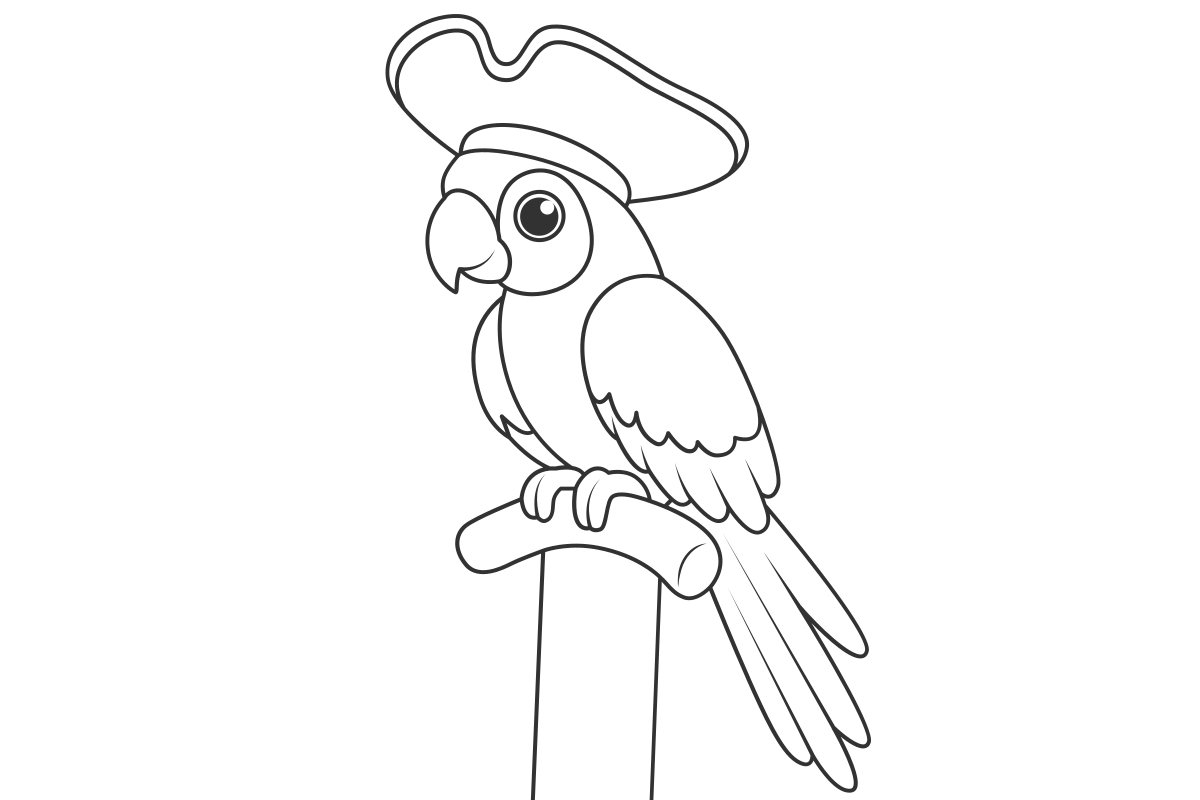
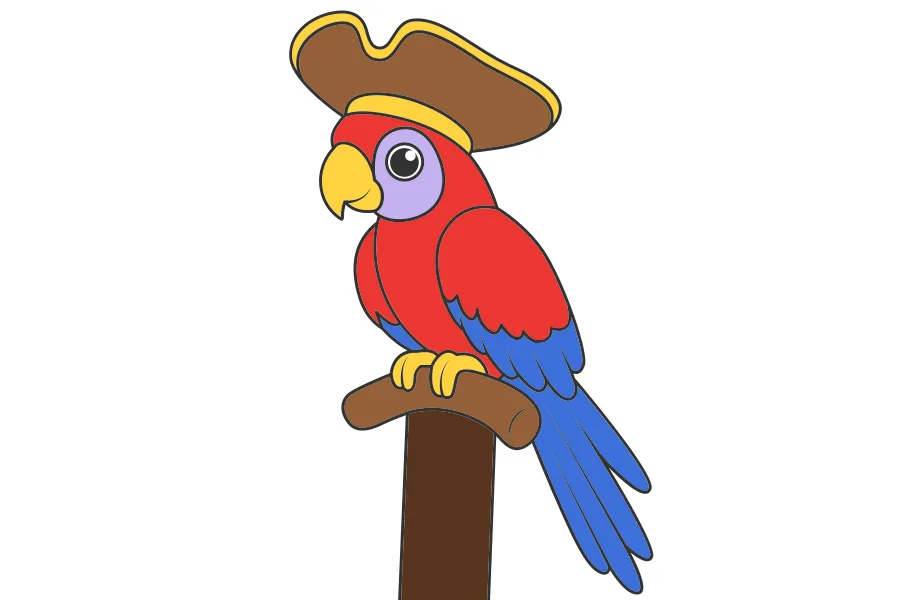
A child taps the wing and expects the wing.
In Farbi, a tap has to land on something: the hat, the beak, one feather. What is under the finger fills, right up to the lines. When two shapes overlap, the smaller one gets the tap, so touching the eye colors the eye.
So the lines have to close.
Paint stays where the outline holds it. Open a gap, and it runs out.
In a real page that gap is a defect. Our check stops a shape whose outline does not close, so it never reaches a child.
Some details are better left alone.
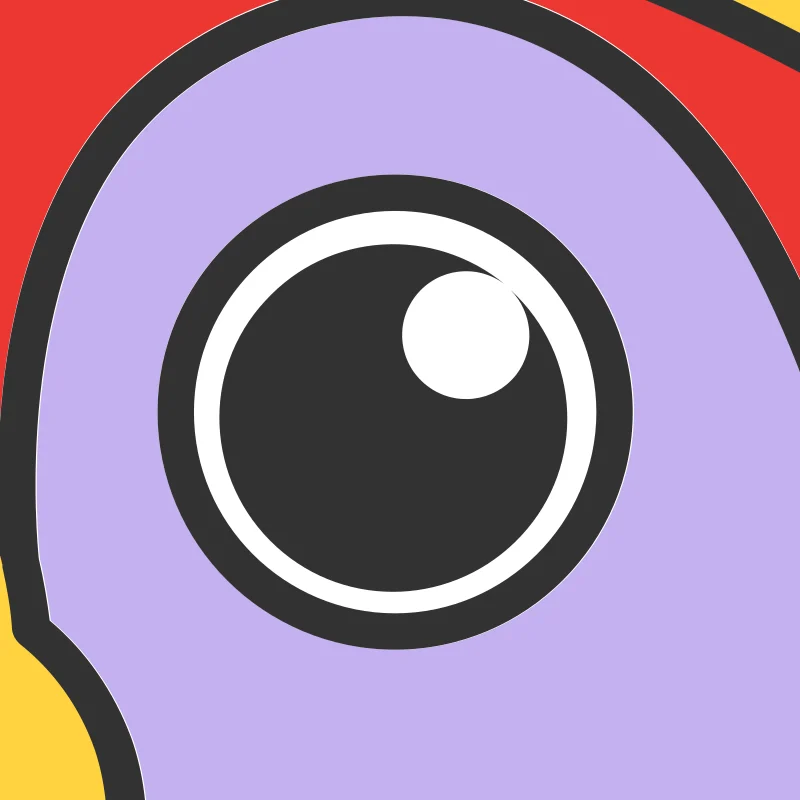
Look at the parrot’s eye. The glint in it is tiny and lovely, and easy to hit by accident. If it took a color, it would take taps meant for the eye. So it stays part of the drawing. Our page-prep tool says it plainly: “That area is too small to fill.”
Every drawing gets sorted into two piles.
Bodies, heads, ears, wings, petals and wheels can take a color. Outlines, fur lines, blush, the shine in an eye and strokes of grass stay as drawn.
First the picture has to be lovely. Then it has to answer a tap.